Key insights from The Water Forum’s Water Conservation Workshop
21st July 2026
Over the past week, water conservation has moved firmly into the national conversation. As Water Conservation Orders help protect supplies during a period of pressure, they also prompt a wider conversation about building long-term water resilience.
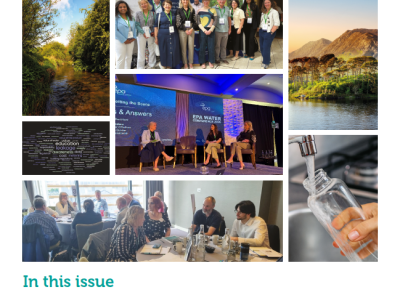
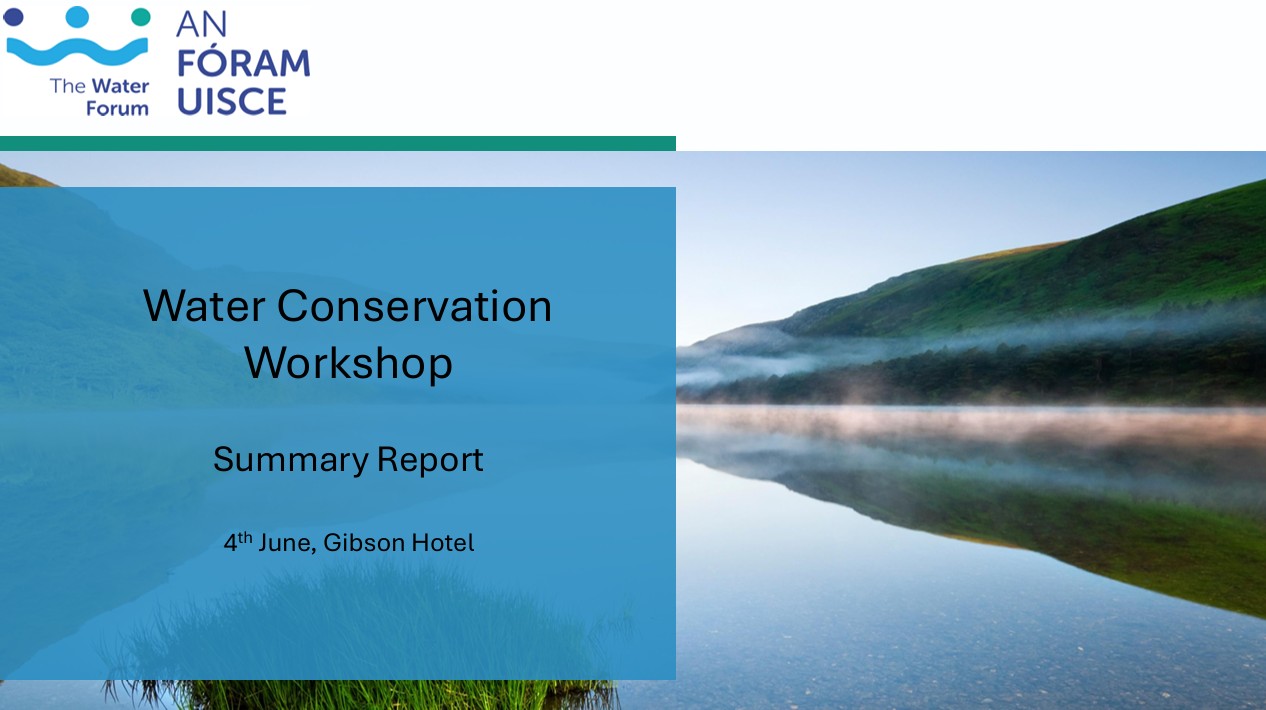
That was the focus of a recent Water Conservation Workshop convened by The Water Forum to support the development of a future National Water Conservation Strategy. Bringing together representatives from Government, Uisce Éireann, the group water sector, regulators, local authorities, academia, business and Water Forum members, the workshop explored the priorities for a future National Water Conservation Strategy and where Ireland should focus its efforts over the coming decade.
One message emerged more strongly than any other: Ireland needs to place a greater value on water.
Water remains largely invisible in everyday life. It arrives when the tap is turned on, yet the investment, infrastructure, treatment and natural resources that make it possible are rarely considered. Improving public understanding of the value and scarcity of water, together with the effort required to deliver safe drinking water, was identified as the foundation for building a stronger culture of water conservation.
Across the workshop, discussions converged around four broad themes.
1) Education, Awareness and Understanding the Value of Water
Making water more visible in everyday life emerged as one of the workshop’s strongest opportunities. Discussions highlighted the need to strengthen water literacy through schools, communities and local networks, supported by coordinated education and communications. A recurring challenge was that water conservation still lacks the visibility of energy efficiency. Education alone, however, was not seen as enough. Lasting behaviour change will also require coordinated policy, investment and practical measures that make water conservation easier in everyday life.
2) Leakage, Metering and Data
Better water-use data, smart metering and leak alerts were identified as important tools to improve understanding of water use, identify leaks and support more informed decision-making. The workshop also highlighted the importance of communicating metering as a tool for information, leak detection and conservation, helping people better understand its role in supporting water conservation. Strengthening customer-side leak detection and repair was identified as another important opportunity.
3) Water-Efficient Buildings and Standards
The built environment was identified as one of the greatest long-term opportunities to reduce water demand. Discussions focused on embedding water efficiency into planning, building regulations, technical standards and retrofit programmes so that homes and buildings are water efficient from the outset. Participants recognised that changes to building regulations will require robust ways of measuring water efficiency and that many product standards are shaped by wider European requirements. Alongside these challenges, clear opportunities were identified through stronger national standards, planning policy, retrofit programmes and technical guidance.
4) Water Stewardship and Non-Domestic Water Use
Businesses and other non-domestic water users were recognised as important partners in strengthening water conservation. Discussions highlighted opportunities to strengthen water stewardship through better benchmarking, greater transparency around water use and sharing good practice across sectors. Alternative water sources and water reuse were also identified as important opportunities to reduce demand for drinking water where appropriate, particularly in areas where water scarcity and high demand coincide. Better data, stronger advisory support and targeted incentives were identified as important enablers to help businesses invest in water efficiency, adopt alternative water sources where appropriate and continuously improve water performance.
A Roadmap for Delivery
Together, the four themes highlight that building a stronger culture of water conservation will require coordinated action across homes, businesses, communities and Government.
The workshop looked beyond identifying priorities. Participants mapped practical actions that could begin immediately, alongside medium and longer-term measures requiring changes to policy, regulation, standards, infrastructure and investment. The discussions also explored the complementary roles of Government, Uisce Éireann, regulators, industry, academia and The Water Forum in delivering a future National Water Conservation Strategy.
The full Water Conservation Workshop Summary Report is available to read here.